
Wireless vs Wired Home Security (2026 Guide)
Pros & Cons for Apartments vs Independent Houses in India
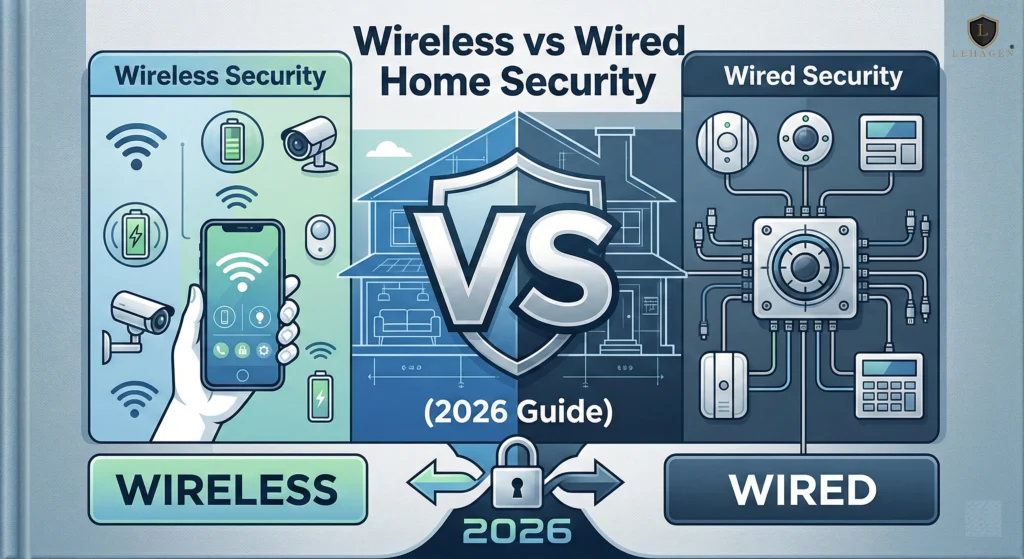
Introduction: Wired or Wireless – What Should You Choose?
The most frequently asked question by the Indian homeowners in 2026 is:
Should a wired or wireless alarm system be installed?
As the number of smart homes grows fast in cities such as Bangalore, Hyderabad, Mumbai and Delhi NCR, the argument of wired versus wireless alarm systems has never been more significant than now.
These two technologies are beneficial. Nonetheless, it remains a matter of decision depending on the kind of property you occupy be it in a flat or a bigger independent house. This comparative analysis of home security will make you know the kind of system to use.
Understanding Wired Alarm Systems
A wired intruder alarm India installation involves installation of sensors on physical cables, control panels, and sirens. These systems are normally installed either at the time of construction or during large-scale renovation.
Wired systems tend to be used in large villas, commercial buildings, and luxury homes due to the fact that they provide consistent connectivity and long-term performance.
All is physically interconnected, and therefore, there is little signal interference. Installation, however, involves drilling, hidden wires, and installation by a professional.
Advantages of Wired Alarm Systems
- Extremely stable connection
- No wireless signal interference
- Ideal for large properties
- Long-term durability
- Less battery dependency
Limitations of Wired Systems
- Expensive installation
- Not suitable for rented homes
- Difficult to modify later
- Requires professional technicians
For large villas and newly constructed houses, a wired intruder alarm India system can provide robust security coverage.
Understanding Wireless Alarm Systems
In wireless systems, sensors apply RF (radio frequency) communication to a central hub. These devices are Wi-Fi mobile alert-driven by batteries.
The greatest wireless alarm benefits in the case are flexibility and easy installation. It does not require extensive drilling or rewiring. This is the reason why wireless security is trending in Indian apartments.
The current RF hubs are secure and encrypted and they have a good performance on residential buildings.
Advantages of Wireless Alarm Systems
- Easy DIY installation
- No wall damage
- Ideal for apartments
- Portable during shifting
- Faster setup time
- Lower upfront cost
Limitations of Wireless Systems
- Requires battery replacement
- Possible signal interference (rare with quality brands)
- Not ideal for very large estates without repeaters
For flats and mid-sized homes, wireless systems are often the smarter choice.
Flats vs Independent Houses: Which Works Better?
The type of property plays a major role in deciding between wired and wireless.
For Apartments / Flats
Wireless systems are usually better because:
- No drilling allowed in rented flats
- Quick installation
- Easy relocation
- Lower cost
- App-based control
ONYYX wireless systems are especially suitable for apartment security due to their plug-and-play design.
For Large Independent Homes / Villas
Wired systems may be more suitable if:
- House is under construction
- Property is very large
- Long-term stability is priority
- Multiple zones require permanent setup
However, hybrid models (wired + wireless mix) are also becoming popular in high-end villas.
Expert Perspective: KNX vs RF Hub Systems
In high-end home automation systems, systems are usually wired with technologies such as KNX that are installed during the building processes. These have profound automation and centralization.
RF-based wireless hubs on the other hand are best suited to retrofit installations where the construction is already in place. They are flexible without the destruction of walls.
The key difference:
KNX = Ideal when it is under construction.
RF Wireless Hub = Ideal where homes are ready to move around.
The wrong system may make the costs to be in unnecessary ways.
Cost Comparison: Wired vs Wireless in India
In most Indian cities:
- Wired systems are more expensive to install.
- The wireless has reduced costs of set up.
- Wired needs labor and wiring material.
- Wireless is generally plug and play.
- To the low-end consumers, wireless security is more cost effective.
Wired systems provide organized long term integration to the owners of luxury villas.
Final Verdict: Which Should You Choose in 2026?
An answer in the wired vs wireless alarm competition is nonexistent. The right choice depends on:
- Property type
- Construction stage
- Budget
- Long-term goals
- Need for portability
- In the case of apartments and small houses, wireless systems are simple and flexible.
- In large independent houses and new buildings, structured stability is available through wired systems.
- Smart homeowners will not simply buy a house depending on the price.